
Law · 4 min read
Are SARMs legal? What the FDA, WADA and Australia’s TGA have actually said
SARMs are sold as supplements and “research chemicals”. What regulators in the US, UK and Australia have said, and what testing found inside them.
- Published
- Sources
- 13 cited
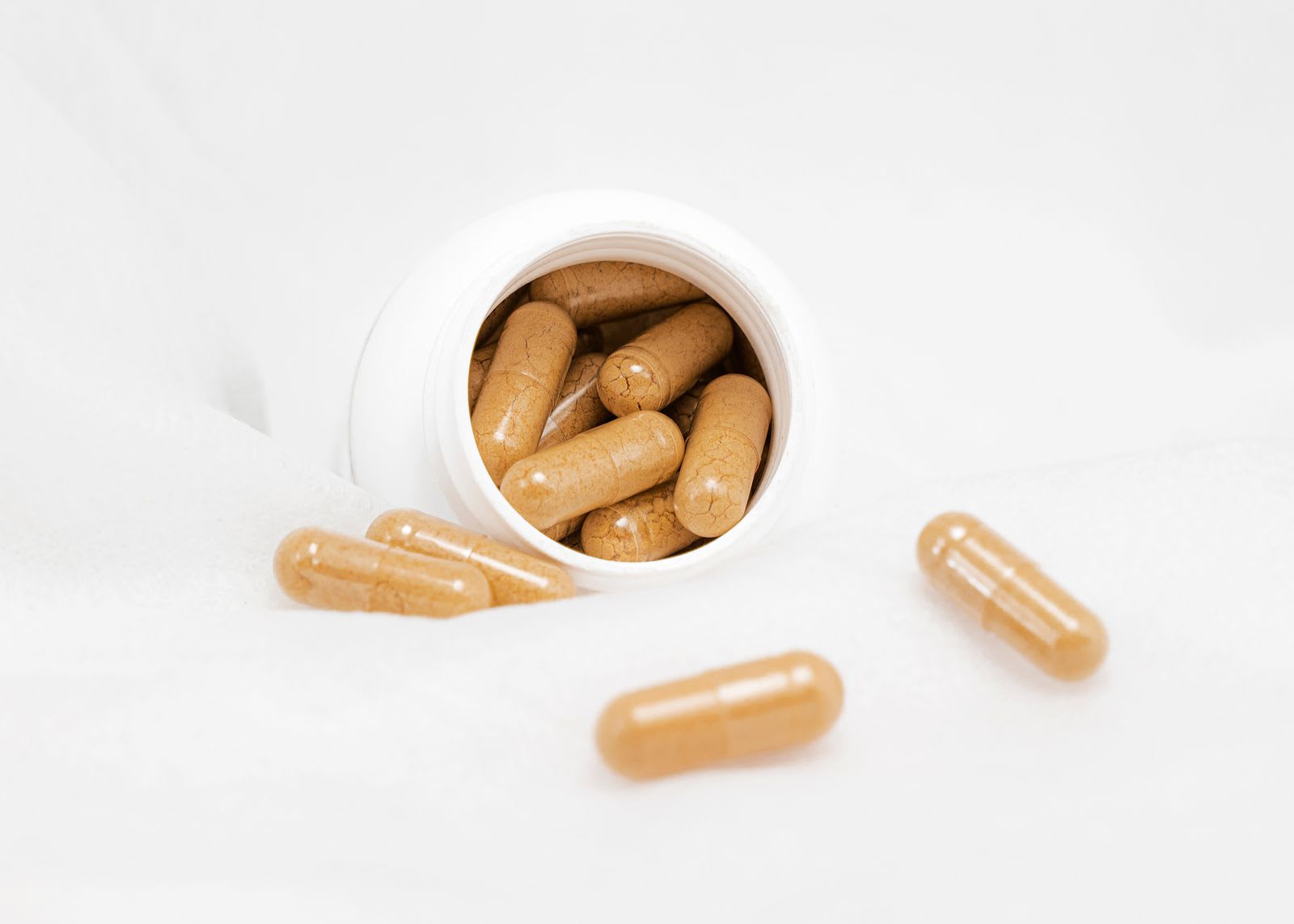
Selective androgen receptor modulators, usually shortened to SARMs, are sold online as "research chemicals" and gym supplements, often with the suggestion that they sit in a legal grey area. The regulators who have looked at them do not see much grey. This article sets out, with sources, what the US Food and Drug Administration, the World Anti-Doping Agency and Australia's Therapeutic Goods Administration have actually said, what laboratory testing found inside products sold as SARMs, and where the law is genuinely unsettled.
It contains no guidance on using them.
What SARMs are, and are not
SARMs are compounds designed to act on the same receptor as testosterone. Some, such as enobosarm (also known as ostarine) and LGD-4033, have been investigated as potential medicines.[3] The point that matters legally is that none has been approved. Australia's regulator put it plainly in 2019: "No SARM has been fully researched, or approved for human use."[8]
United States: the FDA's position
The FDA's position is not ambiguous. In a 2023 consumer update it said: "SARMs cannot be legally marketed in the U.S. as a dietary supplement or drug at this time."[1] Among the risks it names are an increased risk of heart attack or stroke, and liver injury including acute liver failure.[1]
Its page on bodybuilding products repeats the point: "These products are not dietary supplements. Instead, these products are unapproved drugs that FDA has not reviewed for safety and effectiveness."[2]
Why a SARM cannot be a supplement
The FDA's warning letters explain the legal reasoning. In 2017 it wrote to a company selling products containing ostarine and LGD-4033. It set out that the legal definition of a dietary supplement "does not include an article authorized for investigation as a new drug", so such products are unapproved new drugs, and misbranded because they lack adequate directions for use.[3] The FDA says it has issued warning letters to companies selling products marketed as SARMs "over the years" and has pursued criminal actions against distributors.[1]
Are SARMs a controlled substance?
Not at federal level, as of this article's publication. Bills to add SARMs to Schedule III of the Controlled Substances Act were introduced in the Senate as the SARMs Control Act of 2018[11] and of 2019,[12] and neither was enacted. That does not make SARMs legal to sell as supplements: the FDA's position above stands regardless of scheduling.
Sport: prohibited at all times
For anyone who is tested in sport, the position is simpler still. The World Anti-Doping Agency's 2026 Prohibited List places SARMs under S1.2, "Other Anabolic Agents", in a class that is prohibited at all times, in and out of competition. It names andarine, enobosarm (ostarine), LGD-4033 (ligandrol), RAD140, S-23 and YK-11 as examples.[5] WADA publishes a new list each year, so check the current one.
The US Anti-Doping Agency warns that some dietary supplement manufacturers "illegally put ostarine and other SARMs in their products, and some omit ostarine from the label entirely". As of April 2026 it had announced 73 cases involving the use or possession of ostarine.[6] An athlete can test positive from a product that never mentioned a SARM on its label.
What testing found inside products sold as SARMs
In 2017 researchers bought 44 products marketed as SARMs online and analysed them. Their findings were published in JAMA.[4]
| Finding | Products | Share |
|---|---|---|
| Contained one or more SARMs | 23 of 44 | 52% |
| Contained a different unapproved drug instead | 17 of 44 | 39% |
| Contained no active compound | 4 of 44 | 9% |
| Contained substances not on the label | 11 of 44 | 25% |
| Contained the amount the label stated | 18 of 44 | 41% |
In the authors' words: "Only 52% contained selective androgen receptor modulators and many were inaccurately labeled."[4] One of the study's authors was from the US Anti-Doping Agency.
Liver injury
The FDA lists liver injury among the risks.[1] A 2024 review of suspected cases found that since 2020, 20 reports of adverse events had been published, "most described as drug-induced liver injury associated with the use of SARM agonists".[13] Case reports describe injury serious enough to cause jaundice.[13] Reports like these cannot say how common harm is, but they show what can happen.
Australia: prescription-only
In Australia, SARMs are Schedule 4, prescription-only, substances. When the TGA fined a company for advertising them in 2019, it warned that using them "could result in serious harm to consumers' health and safety".[7]
United Kingdom: treated as unauthorised food
The clearest public statements in the UK come from trading standards, the local authority teams that enforce consumer and food law. Warwickshire County Council describes SARMs as an unauthorised "novel food", and in May 2024 it obtained a court order to condemn seized stock under the Novel Foods (England) Regulations 2018.[9] Telford & Wrekin Council, announcing its own seizure in 2025, described SARMs as "not approved for human consumption".[10]
We have not found a statement specific to SARMs from the MHRA, the UK's medicines regulator, so this article does not claim one.
The short answer
Labels like "for research purposes only" do not change what a product is. For how to check what is in a product, read what lab tests can and cannot prove. For anabolic steroids, see anabolic steroids and the law in the US, UK, Canada and Australia.
Questions
- Are SARMs legal in the United States?
- The FDA says SARMs cannot be legally marketed in the US as a dietary supplement or a drug. They are not federally scheduled controlled substances: bills to schedule them in 2018 and 2019 were not enacted.
- Are SARMs banned in sport?
- Yes. WADA’s 2026 Prohibited List places SARMs under S1.2, Other Anabolic Agents, prohibited at all times in and out of competition. USADA warns that some supplements contain SARMs that are not on the label.
- Are SARMs legal in Australia?
- SARMs are Schedule 4, prescription-only, substances in Australia, and the TGA has stated that no SARM has been approved for human use.
- Do products sold as SARMs contain what the label says?
- Often not. A 2017 JAMA study of 44 products found only 52% contained SARMs, 39% contained a different unapproved drug, 9% contained no active compound, and only 41% matched the labelled amount.
Sources
- 1.FDA warns of use of selective androgen receptor modulators (SARMs) among teens, young adults — US Food and Drug Administration, 2023
- 2.Certain bodybuilding products put consumers at risk for heart attack, stroke, serious liver damage and more — US Food and Drug Administration, 2025
- 3.Warning letter: Infantry Labs LLC (535333) — US Food and Drug Administration, 2017
- 4.Chemical composition and labeling of substances marketed as selective androgen receptor modulators and sold via the Internet — JAMA (Van Wagoner RM et al.), 2017
- 5.International Standard: Prohibited List 2026 — World Anti-Doping Agency, 2025
- 6.Athlete advisory: Growing evidence that ostarine is a risk for athletes — US Anti-Doping Agency, 2026
- 7.Redback SARMs pays fine for advertising prescription-only substances — Therapeutic Goods Administration, 2019
- 8.Consumer story: Tim and selective androgen receptor modulators (SARMs) — Therapeutic Goods Administration, 2019
- 9.Illegal muscle drugs worth half a million pounds seized by trading standards — Warwickshire County Council, 2024
- 10.Telford & Wrekin Council seizes illegal SARMs sold as fitness supplements — Telford & Wrekin Council, 2025
- 11.S.2742: SARMs Control Act of 2018 — Congress.gov, 2018
- 12.S.2895: SARMs Control Act of 2019 — Congress.gov, 2019
- 13.Selective androgen receptor modulator use and related adverse events including drug-induced liver injury: analysis of suspected cases — European Journal of Clinical Pharmacology (Leciejewska N et al.), 2024
General information for educational purposes. It is not medical or legal advice, and laws and evidence change. Where it matters, check the primary sources above and speak to a qualified professional where you live.