
Verification · 5 min read
How to spot counterfeit steroids and falsified medicines
How common fake and underdosed steroids are, the warning signs regulators publish for sellers and packaging, and why the most dangerous fakes look genuine.
- Published
- Sources
- 10 cited
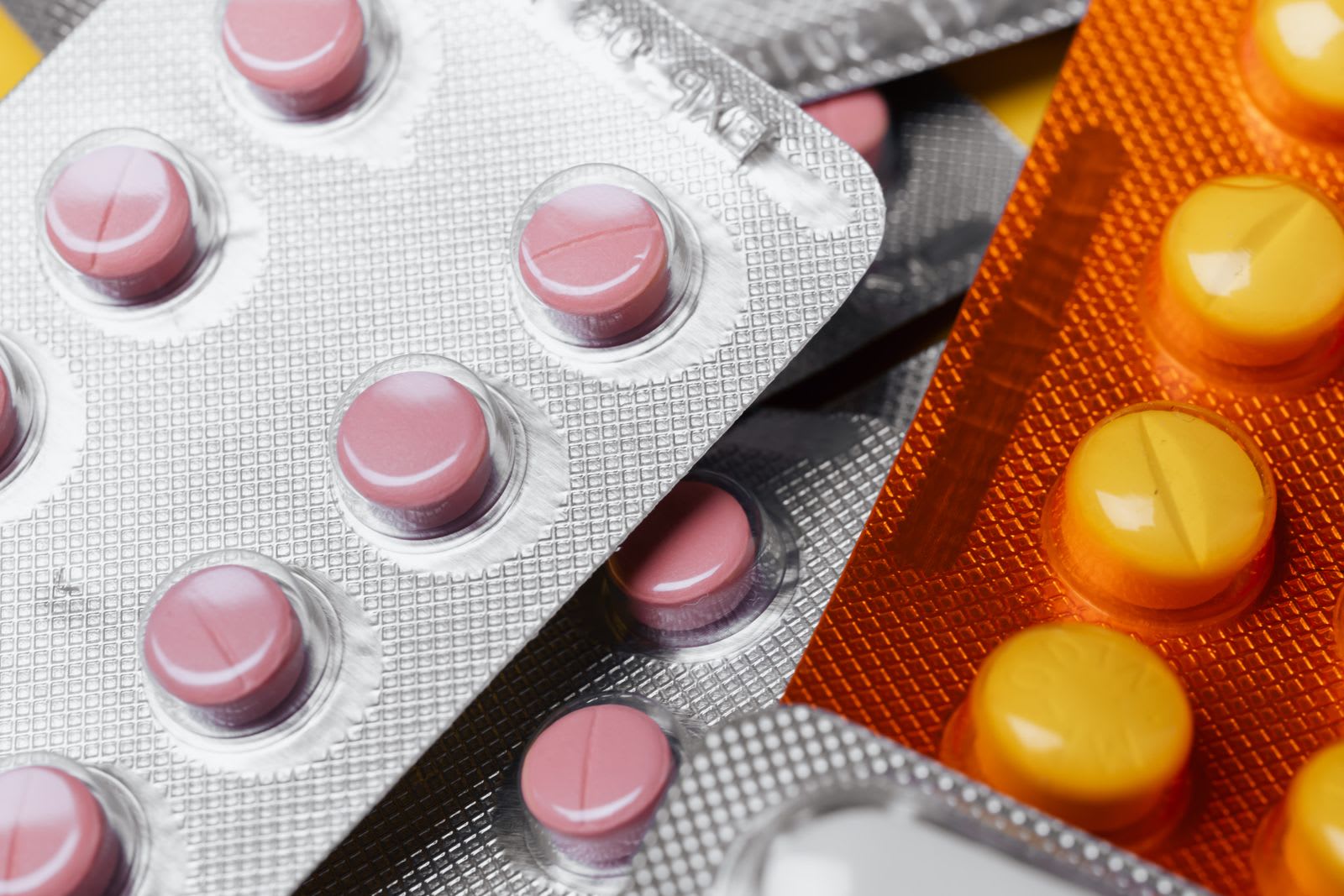
Counterfeit and falsified products are not a fringe problem in performance medicine. They make up a large share of what gets tested. This guide sets out what the evidence says about how common they are, the warning signs regulators publish for sellers and for packaging, and the uncomfortable part most guides leave out: the fakes that matter most cannot be spotted by looking at them.
Substandard, falsified and unregistered
The World Health Organization uses three terms, and the difference between them matters when you are deciding what went wrong with a product.
| Term | WHO definition, in short | What it means in practice |
|---|---|---|
| Substandard | Authorised products that fail their quality standards or specifications, or both[1] | A real product, badly made: too little, too much, or contaminated |
| Falsified | Products that deliberately or fraudulently misrepresent their identity, composition or source[1] | A fake: the label is a lie about what it is or where it came from |
| Unregistered or unlicensed | Products that have not been evaluated or approved by the regulator for the market where they are sold[1] | Nobody with authority has assessed it where you bought it |
A single product can be more than one of these at once.
How common counterfeits are
For medicines in general, WHO estimated in 2017 that 1 in 10 medicines in low- and middle-income countries failed quality control tests, and it notes that substandard and falsified products are often sold online or in informal markets.[2]
For anabolic steroids specifically, the evidence is stark. A 2022 systematic review and meta-analysis pooled 19 studies covering 5,413 samples, mostly seized by authorities in Europe and Brazil.[3]
- 36% were counterfeit: the contents did not match the label.[3]
- A further 37% were substandard: the right substance, in an amount outside the acceptable range.[3]
- Among the counterfeits, 24% contained no active ingredient at all, 44% contained a different substance, and 11% were adulterated with something added.[3]
- Among the substandard samples, two thirds were under strength and one third over strength.[3]
The authors stress that the studies varied widely and the figures should be read with caution.[3] Even allowing for that, well under half of the products tested were what their labels said, in the amount their labels said.
The scale of enforcement
In March 2026, INTERPOL's Operation Pangea XVIII ran across 90 countries and territories. It seized 6.42 million doses of unapproved and counterfeit pharmaceuticals worth USD 15.5 million, with 269 arrests.[9] Anabolic steroids were again the dominant category among performance and lifestyle products, with 86,732 doses seized. The United Kingdom recorded the largest seizures of any country.[9]
In the UK, the Medicines and Healthcare products Regulatory Agency (MHRA) seized almost 20 million doses of illegally traded medicines in 2025, with a potential street value of nearly £45 million.[7] In one case sentenced in April 2026, officers seized more than 130,000 doses of steroids and unauthorised medicines from a £1.8 million network, and seven men received sentences totalling more than 21 years.[8]
Warning signs in the seller
Regulators on both sides of the Atlantic publish checklists for online sellers of medicines. The overlap between them is the useful part.
The US Food and Drug Administration (FDA) says a website may be unsafe if it does not require a prescription, is not licensed in the United States and by a state board of pharmacy, has no licensed pharmacist to answer questions, or offers "deep discounts or prices that seem too good to be true".[4] A safe one gives a physical address and telephone number in the United States.[4]
The MHRA's #FakeMeds campaign lists ten tell-tale signs, including:[5]
- no prescription required for a prescription medicine
- payment accepted in cryptocurrency
- no physical or street address
- exaggerated claims such as "100% safe", "no side effects" or "quick results"
In Great Britain, the MHRA points buyers to the General Pharmaceutical Council's register to check whether a pharmacy is registered.[6]
Warning signs on the pack
The FDA warns about medicine that looks different from what you would expect, or arrives in packaging that is "broken, damaged, in a foreign language, has no expiration date, or is expired".[4] For medicines sold in the UK, the MHRA adds a missing "UK Only" label and a missing patient information leaflet.[5]
Prescription medicines in the European Union have carried two safety features since 9 February 2019: a unique identifier and an anti-tampering device on the outer pack.[10] Their absence on a pack presented as an EU prescription medicine is a strong sign that something is wrong.
When you inspect a pack, check:
- The batch or lot number and expiry date are printed, not handwritten or stuck on, and they match on the box, the vial or blister, and any certificate.
- The seal or anti-tamper closure is intact.
- The print is sharp, the spelling is right, and the fonts and colours are consistent with other packs from the same manufacturer.
- A leaflet is present, and it matches the product.
- The contents look the same as the last genuine pack: fill level, colour, clarity, tablet markings.
Why looking is not enough
Every check in the last two sections catches careless forgeries. None of them catches a competent one. A vial filled with a different substance, or with none at all, looks exactly like the real thing. In the meta-analysis above, those were the most common kinds of counterfeit.[3]
Only a laboratory can tell what is in a container. That is why it is worth knowing how strong each kind of evidence really is.
The seller’s word
“Lab tested”, “pharma grade”, “99% pure”. A claim with nothing behind it that anyone could check.
None
The packaging looks right
Catches careless forgeries. A competent fake, or a genuine box refilled, looks exactly the same.
Weak
A certificate you cannot verify
May describe a different batch, a different product, or no real test at all.
Limited
A verified certificate for your batch
The laboratory confirms it issued the report, the test is on its accredited scope, and the batch number matches.
Good
An accredited test of your own product
Direct evidence about the container you hold, rather than about a sample from the same batch.
Strongest
If you suspect a product is counterfeit
- Stop using it, and keep the packaging, the batch number and your proof of purchase.
- Report it to your national medicines regulator. In the UK, the #FakeMeds campaign explains how.[6]
- If you feel unwell after using any product, seek medical help and take the packaging with you.
For how to tell a real certificate of analysis from a convincing one, read how to read a certificate of analysis. For what the laboratory tests themselves can and cannot establish, read what lab tests can and cannot prove.
Questions
- How common are counterfeit anabolic steroids?
- A 2022 meta-analysis of 19 studies and 5,413 samples estimated that 36% were counterfeit and a further 37% were substandard. The authors caution that the studies varied widely, but fewer than half of the products tested matched their labels.
- Can you tell a fake steroid by looking at it?
- Only a careless one. Packaging checks catch crude forgeries, but a vial containing a different substance or no active ingredient can look identical to the real product. Only laboratory testing shows what is inside.
- What is the difference between substandard and falsified?
- In WHO’s terms, a substandard product is an authorised product that fails its quality standards or specifications. A falsified product deliberately misrepresents its identity, composition or source.
- What should I do if I think a product is counterfeit?
- Stop using it, keep the packaging, batch number and proof of purchase, and report it to your national medicines regulator. If you feel unwell, get medical help and take the packaging with you.
Sources
- 1.Definitions of substandard and falsified (SF) medical products — World Health Organization
- 2.Substandard and falsified medical products (fact sheet) — World Health Organization, 2024
- 3.Fake anabolic androgenic steroids on the black market: a systematic review and meta-analysis on qualitative and quantitative analytical results found within the literature — BMC Public Health (Magnolini R et al.), 2022
- 4.BeSafeRx: Considering an online pharmacy? — US Food and Drug Administration
- 5.#FakeMeds: Spot a fake — Medicines and Healthcare products Regulatory Agency, 2026
- 6.#FakeMeds — Medicines and Healthcare products Regulatory Agency, 2026
- 7.MHRA seizes illegal medicines worth almost £45m in 2025, disrupting major criminal networks — GOV.UK, 2026
- 8.Seven sentenced after MHRA investigation uncovers £1.8m illegal medicines and steroids network — GOV.UK, 2026
- 9.Global crackdown on illicit pharmaceuticals sees USD 15.5 million in seizures (Operation Pangea XVIII) — INTERPOL, 2026
- 10.Falsified medicines — European Commission
General information for educational purposes. It is not medical or legal advice, and laws and evidence change. Where it matters, check the primary sources above and speak to a qualified professional where you live.